Showing posts with label misleading practices. Show all posts

Tuesday, 19 November 2024

Price reductions to be determined on the basis of the ‘prior price’ (C-330/23 Aldi Süd)

 Guest post by Laura Bakola (PhD candidate at Leiden University)

In September the CJEU issued a judgment on price indications and the obligation of the trader to announce a price reduction on the basis of the ‘prior price’ of the product. The case comes after the amendment introduced by Directive 2019/2161, as regards the better enforcement and modernisation of consumer protection rules (hereafter Omnibus Directive), to Directive 98/6 on consumer protection in the indication of the prices of products offered to consumers (Price Indication Directive, hereafter PID). According to the amendment, any announcement of a price reduction shall indicate the prior price applied by the trader for a determined period of time prior to the application of the price reduction (Article 6a(1) PID); the prior price means the lowest price applied by the trader during a period of time not shorter than 30 days prior to the application of the price reduction (Article 6a(2) PID).

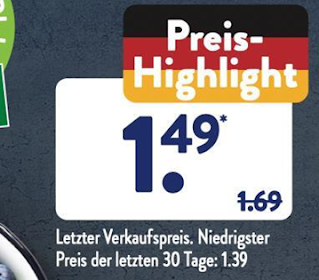
The case involved a supermarket chain which had issued an advertising brochure containing product offers. One of the brochures contained price indications that were presented in the following manner:


Concerning the first price indication, a percentage was used, but the reduction was not determined on the basis of the lowest price charged in the trader’s stores in the 30 days prior to the offer, the latter being the same as the selling price. Concerning the second price indication, the statement ‘price highlight’ was used, while indicating a higher price than the lowest price charged in the 30 days prior to the offer. Against this background, the questions asked by the referring court pertained to the interpretation of Article 6a(1) and (2) PID; namely, whether these provisions require that a price reduction announced by a trader in the form of a percentage, or in the form of a promotional statement intended to highlight the advantageous nature of the announced price, must be determined on the basis of the ‘prior price’, within the meaning of Article 6a(2) PID.

According to the Court, although Article 6a(1) PID does not make it possible to determine whether the price reduction must be calculated on the basis of the prior price, as defined in paragraph 2 of that Article, account should be taken of the Directive’s objectives, as well as the specific objectives pursued by the provisions in question (paras 20-21). As regards the objectives pursued by the Directive, these are the improvement of consumer information and facilitating comparison of the selling price of products, in order to enable consumers to make informed choices (Article 1 and Recital 6 PID); the selling price of products must be unequivocal, easily identifiable and clearly legible, so that that information is precise, transparent and unambiguous (Article 4(1) and Recital 2 PID). Furthermore, both the Omnibus Directive and the PID were intended to achieve a high level of consumer protection (Recital 1 Omnibus Directive and Recital 2 PID). Interpretation of Article 6a PID as meaning that it suffices to mention the ‘prior price’, without using it as the basis for calculating the price reduction, would undermine the aforementioned objectives, in particular that of improving consumer information (para 24). As regards the specific objectives pursued by Article 6a PID, these were intended to prevent traders from deceiving the consumer, by increasing the price charged before announcing a price reduction and thus displaying false price reductions (para 25). Mentioning the ‘prior price’ for mere information purposes, without using it as the basis for calculating the price reduction, would undermine that specific objective, by allowing traders to mislead consumers through price reduction announcements which are not real (para 26).

It follows that the selling price of a product in a price reduction announcement cannot be the same as the ‘prior price’, within the meaning of Article 6a(2) PID, or be higher than it (para 27). The Court also clarified (para 28) that assessment of a commercial practice consisting of displaying a price reduction, which is not determined on the basis of the ‘prior price’, will be made with regard to the relevant PID provision and not the provisions of Directive 2005/29 on unfair commercial practices (UCPD). Article 6a PID specifically regulates aspects linked to price reduction announcements, thus constituting lex specialis in relation to the UCPD.

In light of the above, the Court ruled that Article 6a(1) and (2) of the PID must be interpreted as requiring that a price reduction of a product announced by a trader in the form of a percentage, or in the form of a promotional statement intended to highlight the advantageous nature of the announced price, must be determined on the basis of the ‘prior price’, within the meaning of 6a(2) PID.

The judgment in case C-330/23 Aldi Süd is a welcome ruling, clearing up the interpretation of Article 6a(1) and (2) PID. However, as business practices evolve in response to regulatory changes, problematic price promotion techniques are not expected to cease. The onus is then on enforcement authorities to ensure application of the rules, thus achieving transparency of price indications in consumer markets.

Friday, 14 April 2023

Proposal for Green Claims Directive

The second proposal published on March 22 by the European Commission was for a new Green Claims Directive (COM/2023/166 final - Directive on substantiation and communication of explicit environmental claims).

Boxed Water Is Better on Unsplash
The aim of this proposal is to improve consumer protection against greenwashing and misleading environmental claims, as well as providing consumers with better quality information on the environmental impact of consumer products. This could facilitate consumers making environment-friendly choices. Further, the proposal aims to benefit traders by facilitating fair competition on the environmental sustainability of their products. The envisaged way to achieve this is by introducing common minimum rules on what constitutes a green claim and when traders could make such claims. 

The proposal addresses:

  • Explicit environmental/green claims (Article 2(1) and (2))
    • Comment 1: This proposal does not contain an independent definition of an environmental claim. It refers here to another proposed Directive (empowering consumers for the green transition through better protection against unfair practices and better information - COM/2022/143 final), which suggested amending Unfair Commercial Practices Directive by adding this definition in its Article 2(o). Empowering Consumers for the Green Transition Directive was proposed a year ago by the Commission but still awaits approval by the Parliament. If it is adopted then environmental claims will be defined as: "any message or representation, which is not mandatory under Union law or national law, including text, pictorial, graphic or symbolic representation, in any form, including labels, brand names, company names or product names, in the context of a commercial communication, which states or implies that a product or trader has a positive or no impact on the environment or is less damaging to the environment than other products or traders, respectively, or has improved their impact over time". We are still awaiting the introduction of this definition, which aims to already prohibit the use of generic environmental claims like 'eco-friendly' or 'green'.
    • Comment 2: The above is a very broad definition, but the new proposal aims only to apply to explicit environmental claims. This would be 'an environmental claim that is in textual form or contained in an environmental label'. The explicitness is then related to the form in which the claim is being made, rather than its content. Whilst this test will be easier to apply, providing more legal certainty, it is unclear why, for example, a graphic symbol (logo) on an environmental label will be more explicit than in a company name. This notion also leaves unaddressed overall (misleading) impression of many messages as presenting 'environmentally-friendly' products, e.g. by the communication using green-themed colours and images.
  • Substantiation of claims (Article 3)
    • Comment 1: One of the recognised issues with greenwashing is the lack of common standards on substantiation of environmental claims. The Commission introduces now various guidelines (para 1), which traders are supposed to follow whilst assessing whether their claims are substantiated and could be communicated. This assessment focuses on the life-cycle of a product, seemingly limiting the option to make green claims related to only part of the product/production process. Additionally, when there is lack of harmonisation in applying the guidelines that creates obstacles for the functioning of the internal market, the Commission reserves the right to adopt delegated acts (paras 4 and 5) further specifying, e.g. materials or processes that contribute or cannot contribute to relevant environmental impacts. Considering the so-far observed lack of harmonisation, we may have expected the proposal to already include some of these further specifications, e.g. in the form of a black list of green claims. Already, the European Environmental Bureau (EEB) commented on the regrettable 'lack of a clear ban on carbon neutral claims and on the use of green claims on products that contain hazardous chemicals' (see here). Similarly, also BEUC called for an outright ban of such misleading claims (see here). Although going forward, it makes sense for the Commission to reserve the right to act quickly on improving the market practices across the EU on substantiating green claims.
    • Comment 2: To minimise the information cost for microenterprises, the proposal does not require them to follow the substantiation of claims process, unless they intend to have their green claims verified and certified. This would then be the choice of microenterprises, i.e. whether to follow the procedure from the proposal in light of any expected benefits from certification outweighing its costs.
  • Communication of claims (Article 5)
    • Comment 1: Green claims communicated to consumers are not only to be substantiated following the set requirements (incl. reliance on scientific evidence), but also be significant from a life-cycle perspective of a product. This should limit the amount of green claims used by traders, introducing more transparency and minimising the potential for misleading consumers. 
    • Comment 2: Consumers should receive information on how to use the product to achieve its expected environmental performance, where the product use influences environmental impacts (e.g. waste sorting, use patterns impacting product longevity - Recital 34). This information should accompany the claim and could allow consumers (as well as competitors and enforcers) to easier assess the veracity of the claim. 
    • Comment 3: There are additional rules specifying how green claims are to be communicated. Any claim related to future environmental performance (e.g. traders joining initiatives that will improve circularity of their products) should include a time-bound commitment for improvements of trader's operations and value chains, rather than rely on overall offsetting of negative environmental impacts, not only following from traders' own actions (Recital 35). This aims to counteract confusing climate-related claims, but as noted by the BEUC and the EEB will not be as effective as an outright prohibition of such claims. Para 6 specifies in detail what substantiating information should accompany a green claim and how it should be made available to consumers. There is a question here as to the impact that this detailed information may have on consumers' attentiveness and understanding thereof, as well as to the feasibility of placing all this information on product packaging.
  • Environmental labelling (Article 8)
    • Comment 1: To limit the proliferation of environmental labels, para 3 prohibits further adoption of national or regional environmental labelling schemes. Previously existing labelling schemes may continue their operation in the EU, provided they are in compliance with the proposal. New environmental labels awarded in third countries will require approval of the Commission prior to products carrying them entering the EU market (para 4). Details of all these approval processes are still to be determined.
    • Comment 2: The proposal addresses also the issue of private environmental labelling schemes. These may only exist if they 'provide added value in terms of their environmental ambition' compared to existing EU, national and regional schemes, and if they are compliant with the proposal. This suggests that the new proposed private environmental labelling schemes will not be able to simply replicate environmental assessments already conducted by other available labelling scheme providers.
  • Verification of claims (Articles 10-11)
    • Comment 1: It is up to the Member States to set up procedures allowing for the green claims' verification. This means that the verification process will vary across the EU, in costs and procedure. However, it will need to take place before the green claim is communicated to consumers. Any self-certified environmental labels will constitute an unfair commercial practice (Recital 42). This suggests that traders will not be made able to make environmental claims spontaneously.
    • Comment 2: Verifiers will be accredited third-party conformity assessment bodies, independent from traders or products whose green claims they are assessing. They will issue a certificate of conformity, where appropriate, upon verifying the claim. This certificate is not, however, guiding for the assessment of the environmental claim by authorities or courts. The proposal does not address the issue of the liability of verifiers for incorrectly verifying/certifying certain claims.

    It excludes from its scope:
    • Claims covered by existing EU rules 
      • Comment 1: The proposal contains a long list of already binding EU rules that address various aspects of traders making environmental claims, such as the EU Ecolabel, the organic food logo, energy labelling, ecodesign requirements. It also anticipates, in its Article 1(2)(p), the adoption of future EU rules further addressing explicit green claims and excludes them a priori from its scope of application (e.g. the forthcoming 'Count Emissions EU', see Recital 13). Whilst from the legislative perspective this solution is the easiest to implement, it may not provide the necessary transparency in the market. For consumers and traders both, it will be handy to have comprehensive  graphs/illustrations/tables prepared outlining which rules apply to which products or claims, what the main differences are in these.
    The proposal aims to provide more details related to enforcing the UCPD against unfair environmental claims of traders. It also foresees that consumer organisations will be able to act on the Representative Actions Directive in enforcing collective consumer interests in having access to non-misleading green claims (Article 24). The sanctions that traders could expect for making unsubstantiated green claims may be severe: up to 4% of profits, confiscation of profits and a ban from public procurement contracts, access to public funding for up to 12 months (Article 17).

    Monday, 15 February 2021

    Ali Express and European consumer law

    Since 2010, AliExpress has been connecting consumers outside of China with Chinese sellers willing to ship their products to their countries. I have no direct experience to share, but a look at the reviews on various comparison websites suggests consumers appreciate the great variety of products offered for very low prices and complain about terms of service, quality and delivery failures. 

    Some complaints must have reached the Dutch consumer authorities Autoriteit Consumenten en Markten, which launched a coordinated enforcement action aided by the Dutch consumer association and the European Commission. The result is a commitment by Ali Express to bring its offer in line with European consumer laws, in particular (quoting from the Authority's press release):

    • The cooling-off period (the right of withdrawal);
      Image from Pixabay
      image from pixabay.com
    • Legal guarantees: EU rules regarding guarantees must be indicated, and complied with;
    • Extra costs: it must be indicated whether any taxes or other fees need to be paid, for example customs duties at the border;
    • Sellers: information must be provided about the identity of the seller.
    • Ranking: it must be indicated whether payments have been made in order for a seller to appear higher in the search results. 
    • General terms and conditions: these no longer violate the relevant laws;
    • Complaints: information must be provided about where consumers can turn to if they have any complaints or disputes (no longer the Court of First Instance in Hong Kong, but in the consumer’s own country).  
    While many of these past violations are substantive, the enforcement action apparently framed them as a  series of misleading commercial practices - probably because this is the easiest way for an enforcement authority to intervene. 

    The above does not necessarily mean that you should now go and fill your home with 1-eur plastic unicorns - emotional spending in the pandemic is still more of a current threat than being unable to litigate in Hong Kong over your shopping misfits -, but in case you do, know that EU consumer rights now ostensibly apply on AliExpress too (when your counterparts is a professional, etc etc). 

    Have a great week!


    Friday, 17 July 2020

    Dutch Authority for Consumers and Markets to take action against fake online reviews

    At the end of last month, the Dutch Authority for Consumers and Markets (ACM) announced that it would be taking action against fake reviews, fake likes, and fake followers active on the Internet (here). The ACM identified these practices on platforms such as Facebook, Instagram, YouTube, and Google. This puts social media and influencer marketing – and associated practices perceived as harmful for consumers - in the spotlight. According to the ACM, these practices are harmful for consumers since they undermine the consumers’ confidence in the market, and they provide consumers with unreliable information. This is an important step in the regulation and enforcement of legal rules regarding online review mechanisms. It is not the first time that the ACM devotes attention to this problem. In 2017, the ACM published a study regarding online reviews mechanisms and suggested that their transparency should be increased to fight reliability concerns. The decision to take action against fake reviews and other misleading practices follows up on the guidelines on the protection of the online consumer developed by the ACM earlier this year (here). In these guidelines, the ACM explained that, among other aspects, a business cannot post fake reviews or instruct others to do so nor can it highlight only positive reviews or delete negative reviews. The ACM stated that it will reprimand businesses, influencers or other market participants that offer ‘misleading endorsements’ and, in case of refusal to stop their illegal activity, the ACM admits the possible imposition of fines.

    Although online review-related commercial practices are covered by existing EU legislation (such as the E-Commerce Directive and the Unfair Commercial Practices Directive), the enforcement of such rules in this context is not frequent, although growing in the last couple of years. However, fake online reviews (or misleading online reviews that, not being necessarily fake, are biased due to, for example, social pressure, leading to a problem of reputation inflation) are a problem that affects many consumers. For example, a 2014 study conducted at the request of the European Commission (here) estimated that around 82% of consumers consult online reviews before purchasing a good. The EU consumer law regulation of online review mechanisms has been recently strengthened by the Omnibus Directive that, for the first time, explicitly imposed duties on traders regarding online reviews (see our blogpost on the Directive here). It will be interesting to see how Member States will transpose these measures and what framework will be applicable to online reviews at national level (e.g. competition law, contract law, advertising law).   

    Wednesday, 22 January 2020

    Volkswagen hit by a multi-million fine from the Polish consumer protection authority

    Last September we informed our readers about an interesting report from BEUC summarizing the developments in law enforcement following the Dieselgate scandal. Last week a fine of over PLN 120 million (approx. EUR 28 million), imposed on Volkswagen Group Polska by the President of the Office of Competition and Consumer Protection in Poland (UOKiK), was added to this list. The violations established by the decision (the operative part is available in Polish here) are anchored in the Polish provisions implementing Directive 2005/29/EC on unfair commercial practices (UCPD), specifically Art. 4(1), Art. 5(1), Art. 5(3)(2) of the Act on counteracting unfair market practices (Ustawa o przeciwdziałaniu nieuczciwym praktykom rynkowym). These correspond, respectively, with: the general clause on unfair commercial practices, the specific provision on misleading actions, specification on misleading actions related to the main characteristics of the product.

    According to the press release, the President of the UOKiK contested following behaviours of the trader: disseminating false information in advertising materials which suggested that Volkswagen, Seat, Skoda and Audi cars were environmentally-friendly and met the requirements for nitrogen oxide emissions; providing incorrect nitrogen oxides emission parameters in EC certificates of conformity; issuing guidelines for sellers of these cars which suggested that consumers' complaints should not be taken into account. 

    Besides imposing a fine, the President of the UOKiK also obliged the trader to send a letter to the affected consumers and publish the content of the decision on its website. VW can appeal the decision to the Court of Competition and Consumer Protection (SOKiK) in Warsaw.

    Friday, 27 September 2019

    Consumer law & the Kardashians

    The UK’s Advertising Standards Authority (ASA) recently banned three beauty advertisements, since the ads in question misled consumers and breached the UK’s Code of Non-broadcast Advertising, Sales Promotion and Direct Marketing (CAP Code). The three ads, originating from three different beauty salons, appeared on Instagram in December 2018/ January 2019 and promoted beauty products and non-invasive cosmetic procedures. The decisions can be found here, here and here.

    Besides advertising prescription-only medicines such as Botox, the beauty salons posted pictures of reality TV personalities Kim Kardashian and Kylie Jenner while promoting their own beauty treatments. Furthermore, two of the beauty salons added the terms ‘Kylie Jenner Package’, ‘Win the Kylie Package’ and the hashtag ‘kyliepackage’ to the text next to the photo of Kylie Jenner. According to the ASA, these practices ‘misleadingly suggested the package would give customers lips, cheeks and jawline that closely resembled those of Kylie Jenner’. The ASA concluded that the ads were misleading because the beauty salons did not provide sufficient evidence that substantiated the ads’ implicit claim that Kylie Jenner’s features could be achieved through the use of the advertised products only. Besides, in the ASA’s opinion, these practices misled consumers into thinking those products were used by the celebrities in question.

    From a EU consumer law perspective, the act of posting pictures of widely recognized celebrities is an act by a trader directly connected with the promotion of a product to consumers, which would fall under the scope of the Unfair Commercial Practices Directive (UCPD). Under the UCPD, the conduct of the beauty salons would likely be considered an unfair commercial practice, even when based on a more tenuous link than the one mentioned by the ASA. The mere posting of the pictures of Kim Kardashian and Kylie Jenner does not have to cause consumers to think these celebrities used the products in question, but merely that using the products in question would make them look like these celebrities. This practice is likely to materially distort the economic behaviour of the consumer, since it is likely that, because of this practice, the consumer will acquire the product in the hope of looking like a celebrity. Specifically, this practice could be considered a misleading action under Article 6 of the UCPD. This explains why one of the beauty salons’ counterarguments – that it would be almost impossible for a consumer to look like a celebrity after a non-surgical cosmetic procedure – is legally irrelevant; what matters under EU law is how the average consumer perceives the pictures, even if (perhaps especially if) that perception is affected by biases.

    The invasion of social media platforms such as Facebook or Instagram by misleading advertising and marketing campaigns raises several consumer law issues, stemming from the protection of children and teenage consumers to the blurred lines between an advertisement and an influencer’s ‘real’ opinion. In fact, the boundaries between what is an ad and what is not an ad are often unclear, so much so that the average consumer (if there is one) severely struggles with realizing when she is being targeted by marketing campaigns. Indirectly, this case also highlights the need to further study advertising and consumer law in the light of influencer marketing.

    Monday, 4 March 2019

    Online platforms will be online platforms

    As we reported in October last year (Combating online disinformation...), the major online platforms operating in the EU (e.g. Facebook, Google, Twitter) signed a Code of Practice against disinformation and promised to do better in controlling for and eliminating fake news. This interest in increasing information transparency was mainly motivated politically - ahead of the elections to European Parliament in May 2019 - but should have an impact also on transparency of consumer information, e.g. by controlling for advertisement placements and blocking fake accounts. That is, provided that the online platforms actually deliver on their commitments. To ensure they do, the Commission obliged them to report monthly on the undertaken actions. The first reports of January 2019 are not really promising though (Commission asks online platforms to provide more details on progress made). Only Google provided data on actions taken in January to enhance scrutiny of ad placements throughout the Member States, however, even with this report the Commission considers not to have been given enough details to fully understand how the undertaken actions combat disinformation.

    Thursday, 7 February 2019

    More transparency on hotel booking websites?

    The UK's Competition & Markets Authority (CMA) announced yesterday that it has finalised its investigation into commercial practices of hotel booking websites (Hotel booking sites to make major changes after CMA probe). Under investigation were such well-known online companies as: Expedia, Booking.com, Agoda, Hotels.com, ebookers and trivago. Concerns that were raised and had been investigated pertained to a possibility of pressure selling, misleading discount claims, hidden charges and a suspicion that commission that these websites receive may impact the order, in which hotels are being shown on their websites. Overall, various online commercial practices might have misled consumers to believe that a certain hotel accommodation was either more popular or cheaper than the reality warranted. It was, therefore, questioned whether these companies might have been infringing the Consumer Protection from Unfair Trading Regulations 2008, which implemented the Unfair Commercial Practices Directive in the UK.

    Since all of the above-mentioned companies co-operated with the CMA and agreed to voluntary undertakings, this means that the CMA did not proceed with its findings of any breaches of consumer law. Instead, the voluntary undertaking taken by these companies signifies their commitment to ensure in the future that certain principles will be observed, without admitting any fault in past dealings. All the promised changes should be made before 1 September 2019 and the CMA will expect these actions to be taken also by other websites in the same sector, who were not under investigation at the moment. The agreed on principles are as follows:
    • search results: clarifying whether the order of results is influenced by the amount of commission a hotel pays to the website;
    • pressure selling: currently, when using hotel booking websites, we often see information that other consumers are looking at the same hotel as we are and that there is only 1 room left, as well as showing us hotel accommodation that has already been sold out. This tactic may pressure consumers to rush with making a transactional choice, creating a scarcity condition. It can additionally be misleading, if other consumers are looking at the same hotel indeed but at renting rooms in it on other dates. This practice should now cease;
    • discount claims: ensuring that all discount claims are based on non-misleading criteria and are actually available. This prevents hotel booking websites from offering 'discounts' based on comparing the offered price for a given room to the price of a more luxurious room in the same accommodation, or to a price for the same room but in high season;
    • hidden charges: showing all compulsory charges up front, incl. taxes and fees.
    The question remains whether we can expect these hotel booking websites to change their online practices more generally, not just for the UK consumers. This is something to pay attention to and re-check after September 2019.

    Thursday, 18 October 2018

    Combating online disinformation (aka fake news)

    This week representatives of online platforms (e.g. of Facebook, Google, Mozilla, Twitter), advertisers and advertising industry met with the EU Commissioner, Mariya Gabriel, to present her with their individual roadmaps describing how to limit online disinformation (Code of Practice to fight online disinformation). These roadmaps have been developed pursuant to the self-regulatory Code of Practice to fight online disinformation, agreed on last month. The commitments of the industry go beyond protection of consumers, e.g. against fake online accounts and their practices, towards combating broader understood fake news, e.g. by ensuring also transparency in online political advertising (see further here on the Code of Practices).

    Amongst current best practices we may find on the list: 
    • in advertising policies: "Facebook's ads policy", which contains examples of prohibited types of content that includes false and misleading content; 
    • in service integrity policies: "YouTube spam policy" and "YouTube impersonation policy" - which respectively restrict spam and impersonation
    • in policies and actions to empower consumers: "Reporting Twitter Ads" enabling users to report advertising on Twitter.
    The list of best practices contains quite a few examples of such self-regulation, however, it does not refer to specific provisions in these policies. It would still require some legwork to then find out which policies have actually been adopted by these online platforms/advertisers. Not to mention that it is another matter altogether to establish to what extent these policies are being enforced.

    Wednesday, 25 July 2018

    Can excessive information mislead consumers? CJEU rules in Dyson

    Earlier today the Court of Justice delivered a judgment in case C-632/16 Dyson. The judgment was a response to a request for a preliminary ruling submitted by the President of the Commercial Court in Antwerp regarding a dispute between two vacuum cleaner producers. The proceedings that gave rise to the legal dilemma appear to have been brought with predominantly competitive motives in mind. The submitted claims were nevertheless based on the national provisions implementing the European consumer acquis, namely Directive 2005/29/EC concerning unfair business-to-consumer commercial practices in the internal market (UCPD) and Commission Delegated Regulation (EU) No 665/2013 supplementing Directive 2010/30/EU with regard to energy labelling of vacuum cleaners. The judgment of  the Court of Justice provides welcome clarification on the information to be - or not to be - provided on top of mandatory EU labelling.

    Too little information?

    Dyson, a producer of vacuum cleaners operating without dust bags, found it questionable that the tests required under EU law to assess the energy class of vacuum cleaners were performed with empty dust bags. As a result, in its view, the differences between energy efficiency of vacuum cleaners operating with and without dust bags were not adequately reflected by the EU energy labels. This is because energy efficiency of vacuum cleaners that operate with dust bags gradually decreases as their bags become fuller. According to Dyson, for consumers to receive all relevant information, producers of vacuum cleaners that operate with dust bags should additionally inform consumers about testing conditions, which resulted in the energy classification (i.e. that the tests were performed with empty bags). The question thus appeared, in the first place, whether an omission of such information by a competing vacuum cleaner producer - BSH - constituted a misleading omission within the meaning of Article 7 of the UCPD.

    The Court did not share the view of the claimant. 

    It first decisively rejected the possibility of adding any additional information on the label itself relying on Article 3(4) of Directive 2005/29/EC on conflicts between the provisions of the UCPD and other EU rules regulating specific aspects of unfair commercial practices. According to the Court, such a conflict clearly ocurred in the case at hand (providing information to consumers - even if mandatory - constitutes a commercial practice). Hence, the provisions of Directive 2010/30/EU and the Delegated Regulation No 665/2013, which explicitly prohibit the addition of other information to the EU energy label, should prevail.

    The Court also swiftly dismissed the arguments of Dyson regarding the alleged omission of the contested piece of information from places other than the energy label. The decisive finding was that the UCPD proscribes only the omission of material information and the information at hand - related to the vacuum cleaners' testing conditions - could not be considered as such. This is particularly so considering the extensive list of information duties, addressed at these specific products, already in place with none of them relating to the contested matter.

    Or perhaps too much?

    The dispute between both producers and similarly the request for a preliminary ruling did not end here, however. According to the claimant, BSH's practices were also misleading because excessive information was provided by the company. More specifically, the defendant attached, next to the EU energy label, several labels and symbols that were not provided for in Delegated Regulation No 665/2013, for example, "a green label stating ‘Energy A’, an orange label stating ‘AAAA Best rated: A in all classes’ and a black label with the image of a carpet and stating ‘class A Performance’" (para. 49). The question was therefore whether such a practice was contrary to Delegated Regulation No 665/2013, read in the light of Directive 2010/30/EU.

    The judgment does not provide a clear answer why there is no mention of the UCPD in its second part (despite the fact that the Court decided to reformulate the question referred a little bit). Presumably the reason is similar to the one raised in the context of first question - the conflict between the legal acts. Article 3(1)(b) of Directive 2010/30/EU indeed provides that "with respect to products covered by this Directive, the display of other labels, marks, symbols or inscriptions which do not comply with the requirements of this Directive and of the relevant delegated acts is prohibited, if such display is likely to mislead or confuse end-users with respect to the consumption of energy or, where relevant, other essential resources during use" - therefore covering essentially the same matter in a more specific manner than the UCPD.

    The Court began its analysis by pointing to the two cumulative criteria that could be read out of the abovementioned provision. As regards the former, it swiftly concluded that the labels and symbols used by BSH did not comply with the requirements of the Directive, considering that the relevant labels and symbols were not provided for in Delegated Regulation No 665/2013. The overall assessment of the practice should therefore depend on the second yardstick: whether the display of information was likely to mislead or confuse end-users with respect to the consumption of energy or, where relevant, other essential resources during use. Here the CJEU, in line with its established practice, left the final assessment to the referring court. It did, however, provide the national court with some important guidance.

    Firstly, the Court clearly stressed that the criterion referred to in Article 3(1)(b) of Directive 2010/30/EU was to be interpreted strictly "so as to protect the final consumer against any risk of error or confusion related to the energy consumption during the use of the electric device in question". Interestingly, the Court further observed that "the strict application of that criterion is borne out by that directive’s objective of environmental protection" (para. 55). 

    Secondly, the Court decided to extend the benchmark of an average consumer - one who is reasonably well-informed and reasonably observant and circumspect, taking into account social, cultural and linguistic factors - from the UCPD to Directive 2010/30/EU on energy labelling. This is particularly interesting considering that the latter Directive (later repealed and replaced by Regulation (EU) 2017/1369) did not use a traditional status-related concept of a consumer in its normative part, but rather referred to a broader notion of an "end-user". Nevertheless, according to the Court, "the inextricable link between the issues [addressed in the UCPD and Directive 2010/30/EU] justifies the use of that same criterion" (para. 56).

    Finally, the judgment also hinted at the Court's view on the likelihood of an average end-user (sic!) being misled in the case at hand. According to the Court, "the mere fact that the labels or the symbols displayed by BSH refer to information already present on the energy label cannot suffice to rule out the existence of such a risk". Quite the contrary, excessive information can be misleading. This is particularly because the symbols used by BSH, while essentially conveying the same message, were not graphically identical to those used on the energy label and could, therefore, "give the impression that they convey different information each time" (para. 58). To what extent this conclusion can be transferred outside the specific context of mandatory labelling is still an open question.

    Friday, 13 July 2018

    EU Parliament votes on dual quality products

    On the 12th of July the EU Parliament’s Committee on the Internal Market and Consumer Protection (IMCO), voted on the report by Olga SEHNALOVÁ (S&D, CZ) on dual quality of products in the Single Market and endorsed it along with its suggestions for amendments. 

    Dual quality of food products between eastern and western states in the EU has come to the attention of the EU Commission since 2009, following complaints from Member States, with President Juncker underlining the need to take action to combat this phenomenon in 2017. 

    What exactly is the problem of dual quality of products? The Report which collected evidence from Slovakia, Hungary, Czech Republic and Croatia showed that there are differences in the composition of some products otherwise identical in packaging and brand between western and eastern Member States. While all products were found to be safe to consume, the products sold in Eastern Member States were of lower quality. For example, fish sticks with a lower percentage of fish, biscuits with a lower percentage of chocolate etc. This means that these products were also more unhealthy than their western counterparts. The issue was not unique to food products but similar incidents were reported for cosmetics, pet food and cleaning products.

    The Rapporteur underlined that although it is not illegal for brands to customise their products from member state to member state, consumer should be made aware of that and provided with clear information. This phenomenon undermines the trust of consumers in the internal market and creates a divide between west and east and old and new Member States.

    The measures suggested to tackle this issue are three-fold.  
    1. Improving cross border cooperation and data sharing between national authorities as well as consumer organisations.
    2.  Further clarifying the UCPD on ‘dual quality products’, as it is to be amended according to the New Deal for Consumers.
    3.  The creation of a new logo by manufacturers to show that their products are the same throughout the EU.
    The report will also be put to a vote at the plenary session of the EU Parliament in September and may also have an impact on the reform of the UCPD. The EU needs to send a strong message that there are not two tiers of consumers within the EU.